Tuesday, 21 December 2010

Spirit Bears, Clear-Cutting and Bed Nesting


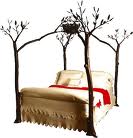
So the snow hasn't gone away, it is now rather like a guest that outstays its welcome, although just turning out the lights and going to bed doesn't seem to make it disappear as it does the odd guest. Going to bed is of course an option which I find appealing especially in winter. I am very good at nesting in my bed surrounded by all the detritus of what constitutes early winter bed upgrading. Cosy over sized pyjamas and industrial strength bed socks for the coldest of feet (tick), Portable TV (tick), laptop(tick), good book(tick), DVD box set of some ilk that you always meant to get through (tick), cup of hot chocolate with mini marshmallows on top (tick), biscuits of all shapes and sizes and dunkability (tick), wind, snow, sub zero temperatures, icy rain outside (tick), microwave.....no that would be going a bit too far although I do know someone who has a microwave in the bedroom specifically for pot noodles and ready meals but he is way past nesting and more into total hibernation with the odd surface for food and the toilet. However come to think of it the microwave doesn't leave the bedroom and migrate back to the kitchen in Spring. So may I wish you the best of Christmas and the greatest of years in 2011 dear reader.

Yesterday I sent a copy of a Christmas bear story to someone in Canada. I wrote this story because the arrival of some singing Canadians and some work with a small boy coincided. The small boy has come to like bears and trees and worries about them both. The bits that are personal to him I have edited out of course but I have hopefully retained some of those ideas and images we arrived at together. We researched Canadian bears and clear cutting by the logging industry in Canada. Have a look at this space satellite photograph of just one area in British Columbia and you may get some idea of what it can mean in real terms to an environment. Some progress has been made between the logging industry in Canada and the environmental lobby but it is still an uphill struggle. We found a story about the Kermode Bears called 'Spirit Bears' by the Native Americans in British Columbia due to their white colouring. They are totally unique, it is believed only five hundred of them still exist in the wild and they are now in danger from an oil pipeline that is to skirt the B.C. rainforest they inhabit. The risk of a major oil spill is minimal and highly unlikely says one smug oil executive, perhaps the events in the Gulf of Mexico may have made him just a little more circumspect.Here is the news story on Youtube if you want to see it
However the brown bear won out as the main characters of the story. The boy felt the bears should be ordinary yet extraordinary bears. Stories written for and with children have such a responsibility not to lose the magic of how a child sees. Hopefully something of that magic remains. If you would like to read it let me know and if I think you aren't one of those spammers that keeps leaving anonymous comments on the blog that I have to reject I'll send you a link to where you can read it on my Dropbox public folder. I have just deleted comments from someone linking to a black girl escort agency, someone to do with concrete ( yes truly someone singing the praises of decorative concrete in the garden) and a number of others who look extremely shady. So ask if you are not shady and the link may be opened unto you.

Sunday, 5 December 2010

Snow; Graphic and Poetic


So dear reader it has snowed, in some places more than others, the offering of snow this way has been meagre but some have made huge fattened white bullocks of snow offerings, snow that bellows at you through the windows and through the television screen. I went to the American Poetry Foundation to mull over snow as I was in search of a Wallace Steven’s poem I recall, and because the Americans know about snow , deep and cold. It is often dumped on the Eastern seaboard and other places regular as annual clockwork, so the Americans, and I have to add, the Canadians know their snow, they can contemplate it without surprise. Here is the Steven’s poem, The Snow Man, beautiful, crisp and all one long sentence. Perhaps the English are more uptight about punctuation than the American poets but that is probably a sweeping generalisation that you can throw back in my face like a huge snowball round a brick.

The Snow Man
by Wallace Stevens

One must have a mind of winter
To regard the frost and the boughs
Of the pine-trees crusted with snow;

And have been cold a long time
To behold the junipers shagged with ice,
The spruces rough in the distant glitter

Of the January sun; and not to think
Of any misery in the sound of the wind,
In the sound of a few leaves,

Which is the sound of the land
Full of the same wind
That is blowing in the same bare place

For the listener, who listens in the snow,
And, nothing himself, beholds
Nothing that is not there and the nothing that is.


That last stanza is worth a few rail disruptions alone, but then I haven’t been that disrupted by the weather so I can say that. I have slithered and slid across some icy back roads in the fens though, deep dykes on both sides tend to keep you focused but snow here has only amounted to a dusting of icing sugar on dark rich Christmas pudding soil in the hinterlands of the fens.
No schools shut but then elsewhere all those children are shaking the shackles free for a while

Snow Day

by Billy Collins

Today we woke up to a revolution of snow,
its white flag waving over everything,
the landscape vanished,
not a single mouse to punctuate the blankness,
and beyond these windows

the government buildings smothered,
schools and libraries buried, the post office lost
under the noiseless drift,
the paths of trains softly blocked,
the world fallen under this falling.

In a while, I will put on some boots
and step out like someone walking in water,
and the dog will porpoise through the drifts,
and I will shake a laden branch
sending a cold shower down on us both.

But for now I am a willing prisoner in this house,
a sympathizer with the anarchic cause of snow.
I will make a pot of tea
and listen to the plastic radio on the counter,
as glad as anyone to hear the news

that the Kiddie Corner School is closed,
the Ding-Dong School, closed.
the All Aboard Children’s School, closed,
the Hi-Ho Nursery School, closed,
along with—some will be delighted to hear—

the Toadstool School, the Little School,
Little Sparrows Nursery School,
Little Stars Pre-School, Peas-and-Carrots Day School
the Tom Thumb Child Center, all closed,
and—clap your hands—the Peanuts Play School.

So this is where the children hide all day,
These are the nests where they letter and draw,
where they put on their bright miniature jackets,
all darting and climbing and sliding,
all but the few girls whispering by the fence.

And now I am listening hard
in the grandiose silence of the snow,
trying to hear what those three girls are plotting,
what riot is afoot,
which small queen is about to be brought down.


Then browsing snow in these American archives I found Charles Tomlinson, an English poet who has never quite had the recognition here that he deserves I think. He is in The Bristish Poetry Archives but I prefer the selection of his poems they have available on the American Foundation site. He is also a painter and his work is full of visual images and landscapes as well as being deeply influenced by American poets. His poem Snow Signs resonates with his understanding and close observation of landscape and the image of the ‘simplification of the snow’ is for me absolutely spot on.

Snow Signs

by Charles Tomlinson

They say it is waiting for more, the snow
Shrunk up to the shadow-line of walls
In an arctic smouldering, an unclean salt,
And will not go until the frost returns
Sharpening the stars, and the fresh snow falls
Piling its drifts in scallops, furls. I say
Snow has left its own white geometry
To measure out for the eye the way
The land may lie where a too cursory reading
Discovers only dip and incline leading
To incline, dip, and misses the fortuitous
Full variety a hillside spreads for us:
It is written here in sign and exclamation,
Touched-in contour and chalk-followed fold,
Lines and circles finding their completion
In figures less certain, figures that yet take hold
On features that would stay hidden but for them:
Walking, we waken these at every turn,
Waken ourselves, so that our walking seems
To rouse some massive sleeper out of winter dreams
Whose stretching startles the whole land into life,
As if it were us the cold, keen signs were seeking
To pleasure and remeasure, repossess
With a sense in the gathered coldness of heat and height.
Well, if it's for more the snow is waiting
To claim back into disguisal overnight,
As though it were promising a protection
From all it has transfigured, scored and bared,
Now we shall know the force of what resurrection
Outwaits the simplification of the snow.


So I went from that, following footsteps in the snow, to a Kenneth Patchen poem from the forties that a graphic novelist had taken and run with as part of the American Poetry Foundation's project called The Poem as Comic Strip. This, after looking through the various responses seems a great project, I would like to let some British graphic novelists loose on a few poems and see what comes out of it. Not to self must talk to the Boo ( Beloved Only Offspring) who is both a writer and comic book illustrator about this). We have talked now and again about doing a collaboration as we have done another project together quite successfully. There is a graphic novel of The Wasteland by the way if anyone is interested by Martin Rowson


The Snow Is Deep on the Ground

by Kenneth Patchen

The snow is deep on the ground.
Always the light falls
Softly down on the hair of my belovèd.

This is a good world.
The war has failed.
God shall not forget us.
Who made the snow waits where love is.

Only a few go mad.
The sky moves in its whiteness
Like the withered hand of an old king.
God shall not forget us.
Who made the sky knows of our love.

The snow is beautiful on the ground.
And always the lights of heaven glow
Softly down on the hair of my belovèd.


If you want to see the comic strip version by Ron Rege here is the link

By way of an after thought here is Fiona Shaw reading a tiny section from the Wasteland, she is a bit like Marmite , some like her, others hate her take on the Wasteland, personally I quite like the humanity she brings to it.
Saturday, 27 November 2010

Sunday and All Next Week


Sorry to have been incommunicado dear reader. I have been trying to write 50,000 words of a second novel in a month, an arbitrary target I know but I find deadlines so irritating I tend to try and meet them just to prove who's in control, the deadline or me. Of course it is simply a mind game as I have set the deadline in the first place ( well more or less I registered for the worldwide National Novel Writing Month) where the foolhardy are encouraged to write a whole novel in a month or 50,000 words.

I have much to talk about which may or may not interest you when I come back to the blog planet, Aldeburgh Festival, the prose poem, a night spent at Little Gidding, a performance of Journey’s End, a night spent listening to M R James ghost stories by candlelight in an 11th century Manor house near here,. Treat this as one of those trailers you used to get before films, Sunday and all next week. Trailers now seem more general rather than time specific as if we need weeks, even months to get whipped into buying a ticket for the show by the hype.

In the meantime if you want to read a review I wrote about Phantom Noise by Brian Turner you can find it here

Saturday, 16 October 2010

Letters, Sonnets, Out of Body Experiences and Jumping the Synaptic Tracks


So long time, no blog reader. Busy, busy writing, reading, working, sleeping, walking, having visitors.

My friend from Philadelphia, S, came to stay whilst she visited her elderly mother and celebrated her 95th birthday (they build them to last in the fens). One evening I unearthed the sheaf of letters she has written to me in the 32 years she has lived in the States. We in fact only knew each other for a little over two years before she found love with a lovely American and moved stateside. She has an equally big pile of my letters back at home. Strangely she felt re-reading them wouldn’t feel right and I think I would feel the same if she gave me my letters. Our younger selves, our lives, up and downs were all poured into these letters. Things and people we have long forgotten or consigned to some box way back in the storage depot of our brains are held in blue biro. She always wrote either on airmail paper, that tissue bordered in white, red and blue or on yellow lined legal notepad paper. The physicality of them so easily fixed in the brain, the handwriting hardly changed and the English spellings doggedly refusing to give way to color or center.

What is it about our own old letters that appeals and yet at the same time seems dangerous, I have to admit to hanging onto a number of old love letters but never reading them. Maybe it is their fixed nature, the moment of writing pinned to the paper for all time or until they fade or are destroyed. Barthes often talks about photographs in this way, a moment pinned like a butterfly for constant re-examination. Letters have this same quality but words are somehow different. A photograph is I know never totally objective but certain things are available to every eye. A letter contains a striving for conversation; a striving for the creation of a dialogue that can only be one sided. Even a response from the recipient is delayed and often changed by the passage of time it takes for it to materialise as an answer. Is a personal letter a monologue to an audience of one whose response you invite or predict from past knowledge? Placing some things on paper can quantify and qualify experience, words becoming not the butterfly itself but the pins which try to hold it down in the cabinet of curiosities.

That’s why those Christmas summary letters that some send you , whilst being welcome as news about someone can also jar as you know you are not the sole audience. This person did not sit down and write this solely for me, they did not take time, effort, or go through the whole physical experience of writing and posting a letter just for me.

I have just re-read some of Elizabeth Bishop’s and Robert Lowell’s letters to each other and sometimes in them I detect that they too were writing for an audience bigger than one, for posterity or whatever they saw as passing for that.

Do we write a poem for an audience of one, a sole recipient or are they those Christmas round robin missals? Are or should we write with an audience or reader in mind at all? Are poems a letter to ourselves that we allow others to be privy to in some game we play with our own mind set that avoids the question of readership altogether? Would we really like to be Emily Dickinson and place them in a trunk for no-one or posterity, which ever is the first, to give them credence?

As I read at the Toddington Poetry Society this week to a lovely audience I did at one point have one of those out of body experiences that I am sure other poets have ( or if they do I’d be interested to hear from them as it may highlight that this is not some peculiarity of my own). The experience in brief is that moment when you find yourself standing at the back of the audience watching yourself read your poem and being acutely aware of the moment, the feeling, the whole physical process that brought that poem here to this place, at this time and coming out of your mouth. This is not something to do just with very personal ‘memoir poems’. In this case it was a poem that had sprung from one of those synaptic connections that happen in a blink of an eye that you manage to catch before it bleeds away into the brain or the ether. A chance conversation lurching into something I was reading and the poem whilst not written had some private and individual moment of fertilisation.

At the reading I had one of those, ‘Where do you get the ideas for your poems from?’questions. This openness to those moments when two synaptic pathways in the brain suddenly jump their own track and make a third, is maybe the only true answer I can give. Even if writing about something you think is heavily focused on one thing the best poems have some element of something other weaving into it.

I have just been reading Don Paterson’s article in the Guardian about Shakespeare’s sonnet and have thought that form can sometimes be the way we are made to discipline ourselves to be open to the something other. It makes us observe and focus in such a precise way that rather than closing ourselves down to other thoughts it pushes us to engage with them via its very structure thus opening up those serendipity synaptic cross overs.

I have a feeling Shakespeare , being a genius, was able to engineer those crossovers at will and yet his social context alone made him have to write one thing in terms of another, love for another man, how he felt about women, politics etc. This conceptual juggling in order to stay this side of the law and public condemnation must have led him into areas he may not otherwise have gone. The Dark Lady of the sonnet may be one person, several people, a concept, and several concepts all at once but in the end it is the reader’s experience of the poem that counts. Some would get more if they take it apart, strive for the minutiae of meaning ; others are happy without that knowledge to exalt in the language and what it means to them alone. Here’s a link to a website that has all of Shakespeare’s sonnets with commentaries ( which I can’t necessarily vouch for as insightful) if you want to look some of them up.


I started my reading at Toddington with something Dylan Thomas wrote in 1961 in his Poetic Manifesto which always gives me pause for thought.

‘You can tear a poem apart to see what makes it tick.... You're back with the mystery of having been moved by words. The best craftsmanship always leaves holes and gaps... so that something that is not in the poem can creep, crawl, flash or thunder in.’

Shakespeare knew all about holes and gaps. He must also have had those out of body experiences standing at the back of the Globe listening to himself coming out of another’s mouth.